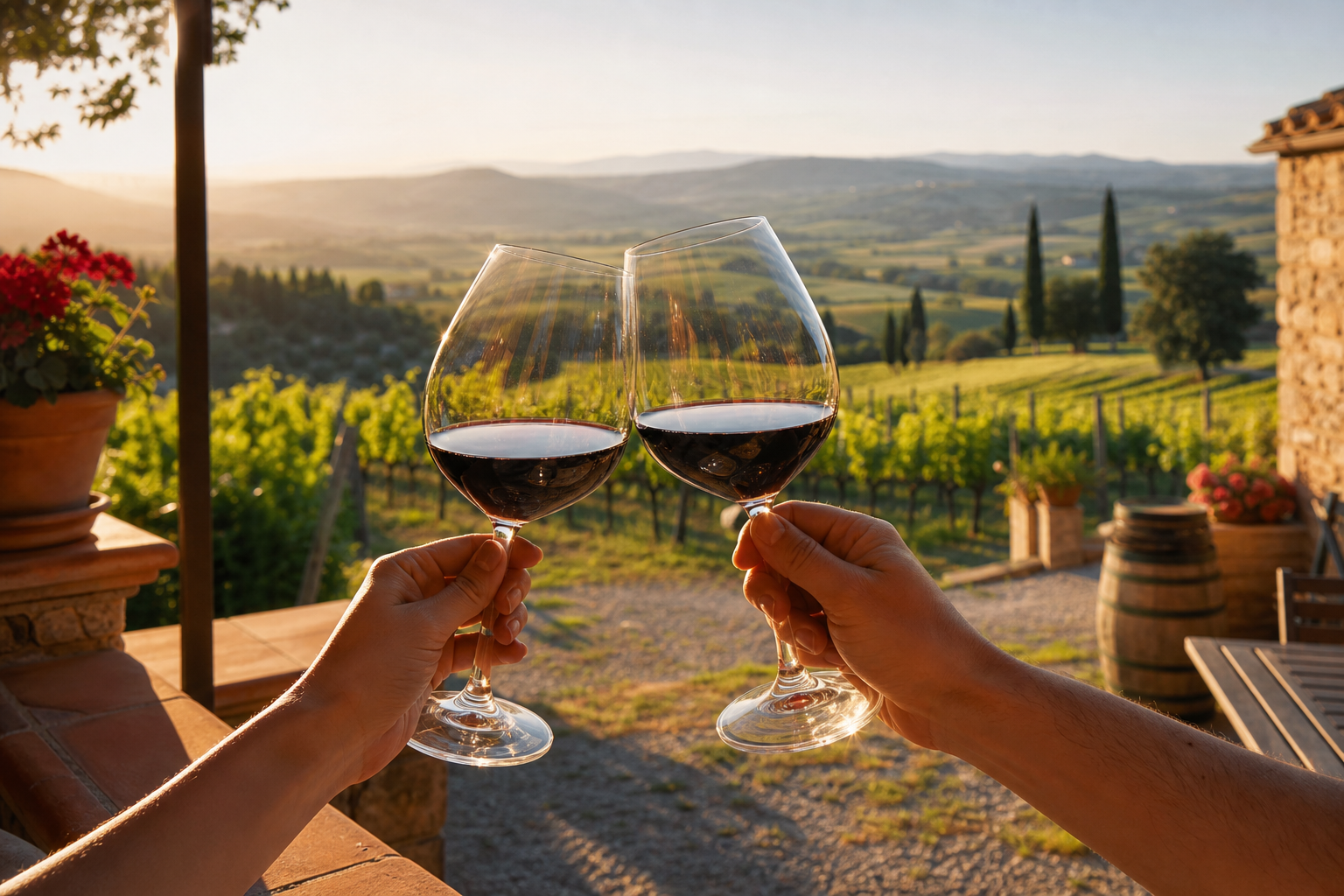
Wine tasting can feel intimidating if you approach it as a performance. It is not. It is a method of paying attention, and like most skills worth having, it improves with practice. The Chianti region is one of the best places in the world to begin that practice, for reasons that go beyond the quality of the wine: the landscape, the people, the food, and the directness of the connection between what is in the glass and what surrounds you all make the learning process genuinely enjoyable.
Here is a straightforward guide to getting the most out of wine tasting in Chianti, whether you have never done it before or whether you simply want to deepen what you already know.
The Five S Method
Professional wine tasters use variations on this method worldwide. It is not about pretension: it is about slowing down enough to actually notice what is in the glass.
See. Hold the glass against a white background (a napkin, or the white tablecloth) and look at the colour. In a young Chianti Classico, you will see a ruby red with violet edges. As the wine ages, the colour shifts toward garnet, then brick red at the rim. The intensity of the colour gives you a first indication of the wine’s concentration and age.
Swirl. Tilt the glass and swirl the wine gently to coat the sides. Watch the “legs” (the drops of wine that run slowly down the glass after swirling): these indicate alcohol and body, though they tell you less than the smell and taste that follow. The main purpose of swirling is to release the wine’s aromas by increasing its surface area and contact with oxygen.
Smell. Nose the glass before tasting. Inhale slowly and try to identify distinct aromas. A young Chianti Classico typically offers sour cherry, pomegranate, dried rose petal, dried herbs (especially oregano and thyme), and a slightly earthy, iron-like mineral quality. In older wines, secondary aromas develop: leather, tobacco, dried figs, cedar, and balsamic notes. Do not worry if you cannot name everything you smell: the act of paying attention and looking for something is the practice itself.
Sip. Take a small mouthful and hold it briefly before swallowing. Notice the acidity (does it make your mouth water?), the tannins (is there a drying, gripping sensation on your gums?), and the weight of the wine on your palate. Chianti Classico has naturally high acidity and firm tannins, both of which make it a superb wine with food.
Savour. After swallowing, notice the finish: how long do the flavours linger? A good Chianti Classico has a long finish, with the fruit and earth notes persisting for 20 to 30 seconds or more after the wine is gone. A short, thin finish on a wine that seemed pleasant at first taste is often a sign that the wine is simple or that quality was compromised during production.
What to Look for in a Chianti Classico
Beyond the five S method, there are a few specific things that distinguish a good Chianti Classico from a mediocre one. The acidity should feel lively and refreshing rather than sharp or harsh. The tannins should grip the palate firmly but not harshly: they should feel like velvet rather than sandpaper. The fruit should be present but not sweet: sour cherry and dried berry rather than jam or artificial sweetness. And there should be a quality of place in the wine: that earthy, herbal, slightly iron-tinged quality that comes from the galestro soils and the Sangiovese grape grown in this specific landscape.
Common Italian Wine Terms to Know
A small Italian wine vocabulary goes a long way in Tuscany. Here are the most useful terms.
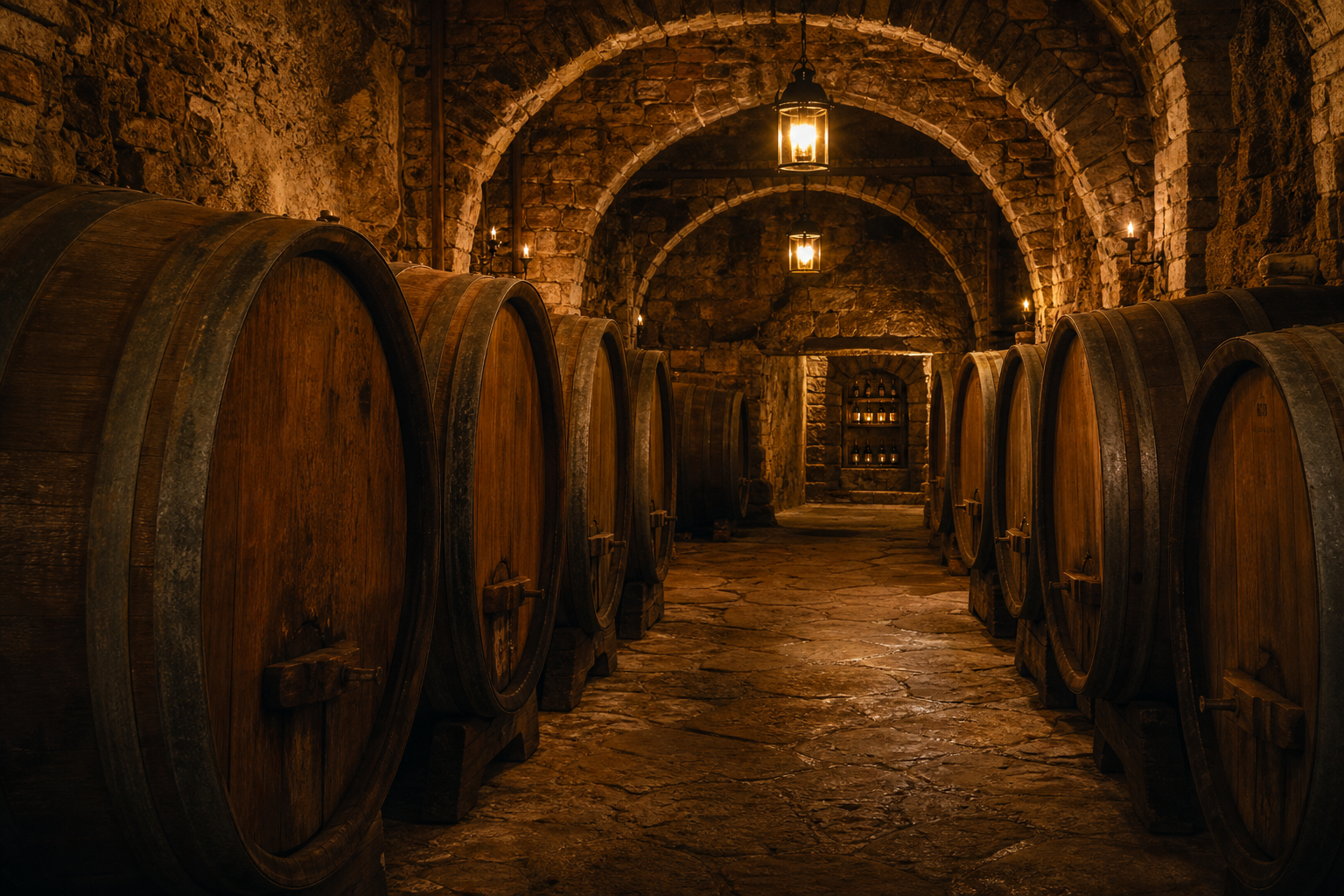
Annata refers to the standard vintage release of a Chianti Classico, the entry-level tier. Riserva is an aged version with a minimum of two years maturation. Gran Selezione is the highest tier, from a single vineyard or best-plot selection, with at least 30 months of ageing. DOCG (Denominazione di Origine Controllata e Garantita) is the highest Italian wine classification. IGT (Indicazione Geografica Tipica) is a more flexible classification used for wines that do not fit the DOCG rules, including some of Tuscany’s most celebrated wines (the so-called “Super Tuscans”). Vino da tavola means table wine. Cantina means winery or cellar. Vendemmia means harvest or vintage.
How to Behave at a Winery Tasting
Winery hosts in Tuscany are generally warm, proud of their work, and happy to share it with guests who show genuine curiosity. A few courtesies will make the experience better for everyone.
Arrive on time for a booked appointment. Avoid wearing heavy perfume or cologne, which interferes with your ability to smell the wine (and disturbs other tasters). Ask questions freely: producers enjoy explaining their choices and their vineyards. If you use the spittoon provided, do so without embarrassment: it is there specifically to allow you to taste multiple wines without becoming impaired. And if you enjoyed the tasting, buying a bottle or a case is the most direct and appreciated way of saying so.
Ordering Wine in a Tuscan Restaurant
In Tuscany, ordering the house wine (vino della casa) is rarely a risk. Most trattorias and osterias buy their house wine from a local producer and serve it in a half-litre or litre carafe. It is inexpensive, usually very decent, and a perfectly acceptable choice.
If you want to explore the list, ask the staff for a recommendation with your food. Chianti Classico Annata pairs with almost anything on a Tuscan menu. Riserva and Gran Selezione wines are worth ordering for a special occasion or alongside a bistecca alla Fiorentina.
Chianti Classico is an ideal entry point into Italian red wine for several reasons: it is food-friendly, widely available, produced across a range of quality tiers and price points, and expressive of a single, readable place. Once you understand it, the broader world of Italian wine becomes considerably less mysterious.
Explore the wine estates and local restaurants near Villa Talciona and plan your Chianti wine education. Whether you are a complete beginner or a seasoned enthusiast, book your stay at Villa Talciona and taste Chianti Classico in the landscape that created it.